Factors Causing Antimicrobial Resistance ( AMR )
- New Euphoria
- Jan 26, 2025
- 3 min read

Updated: Jan 27, 2025
Understanding the Factors Driving Antimicrobial Resistance (AMR)
Antimicrobial resistance (AMR) is a global health crisis, driven by several interconnected factors. This blog delves into the causes of AMR, highlighting the scientific mechanisms and human practices that contribute to this growing problem.
Overuse and Misuse of Antimicrobials
The overuse and misuse of antimicrobials in humans significantly contribute to AMR. Many individuals self-medicate, using leftover antibiotics without consulting a healthcare professional. This often leads to improper usage and fosters resistance. Additionally, patients frequently stop taking their prescribed antibiotics once symptoms subside, leaving behind bacteria that may develop resistance. Healthcare providers also play a role, with inconsistent prescribing practices and the over-prescription of antibiotics when they are not medically necessary.
Antimicrobial Use in Agriculture
The agricultural sector’s reliance on antimicrobials for disease prevention and growth promotion in livestock is a significant driver of AMR. These practices create selective pressure, enabling resistant bacteria to thrive and spread to humans through contaminated food, direct contact with animals, or environmental exposure.
Horizontal Gene Transfer (HGT)
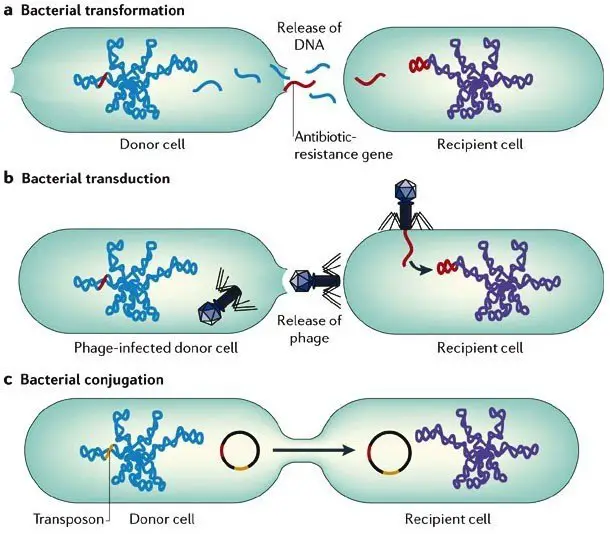
Bacteria can acquire resistance through horizontal gene transfer (HGT). This occurs in three main ways:
Conjugation: Direct exchange of resistance-carrying plasmids between bacteria.
Transformation: Uptake of free DNA from the environment.
Transduction: Transfer of resistance genes by bacteriophages.
For instance, Streptococcus pneumoniae can acquire resistance to penicillin through transformation.

Poor Infection Control in Healthcare Settings
Healthcare facilities are hotspots for AMR. Inadequate hand hygiene, improper sterilization, and overcrowding facilitate the spread of resistant bacteria. Common hospital-acquired infections, such as Methicillin-resistant Staphylococcus aureus (MRSA) and Carbapenem-resistant Enterobacteriaceae (CRE), pose severe risks to patients.

Spontaneous Gene Mutations
Resistance can also arise from spontaneous mutations across different pathogens:
Fungi: Mutations alter drug targets, increase efflux, or impair drug activation.
Parasites: Genetic changes modify drug targets, uptake, or activation.
Viruses: Mutations in replication enzymes or surface proteins evade drug effects.
Bacteria: Strategies include blocking antibiotic entry, expelling the drug, or altering drug targets.
By understanding the factors driving AMR, we can implement better strategies to combat this threat and safeguard the effectiveness of antimicrobial treatments for future generations.
References
Ayukekbong, J. A., Ntemgwa, M., & Atabe, A. N. (2017). The threat of antimicrobial resistance in developing countries: Causes and control strategies. Antimicrobial Resistance & Infection Control, 6(1). https://doi.org/10.1186/s13756-017-0208-x
Cannon, R. D., et al. (2009). Efflux-mediated antifungal drug resistance. Clinical Microbiology Reviews, 22(2), 291–321. https://doi.org/10.1128/CMR.00051-08
Davies, J., & Davies, D. (2010). Origins and evolution of antibiotic resistance. Microbiology and Molecular Biology Reviews, 74(3), 417–433. https://doi.org/10.1128/MMBR.00016-10
Johnston, C., Martin, B., Fichant, G., Polard, P., & Claverys, J. P. (2013). Bacterial transformation: Distribution, shared mechanisms, and divergent control. Nature Reviews Microbiology, 12(3), 181–196. https://doi.org/10.1038/nrmicro3187
Magill, S. S., Edwards, J. R., Bamberg, W., Beldavs, Z. G., Dumyati, G., Kainer, M. A., … & Fridkin, S. K. (2014). Multistate point-prevalence survey of health care-associated infections. New England Journal of Medicine, 370(13), 1198–1208. https://doi.org/10.1056/NEJMoa1306801
Menéndez-Arias, L. (2013). Molecular basis of HIV drug resistance. Antiviral Research, 98(1), 93–120. https://doi.org/10.1016/j.antiviral.2013.02.013
University of Queensland. (2023, November). How do bacteria actually become resistant to antibiotics? Institute for Molecular Bioscience. https://imb.uq.edu.au/article/2023/11/how-do-bacteria-actually-become-resistant-antibiotics
World Health Organization. (2020). Antimicrobial resistance. https://www.who.int/news-room/fact-sheets/detail/antimicrobial-resistance
Moye-Rowley, W. S. (2020). Multidrug resistance in fungi. Frontiers in Microbiology, 11, 545913. https://doi.org/10.3389/fmicb.2020.545913
Gregson, A., & Plowe, C. V. (2005). Mechanisms of resistance of malaria parasites to antifolates. Pharmacological Reviews, 57(1), 117-145. https://doi.org/10.1124/pr.57.1.4
Anderson, T. J. C., et al. (2021). Identifying parasite genes underlying antimalarial resistance. International Journal for Parasitology: Drugs and Drug Resistance, 16, 1-14. https://doi.org/10.1016/j.ijpddr.2021.04.001

Comments